The Need
The challenge isn't a lack of support available. It's a lack of connection and urgency.
Our region is home to extraordinary universities, thriving businesses, and deeply generous people. It is also home to a housing and stability crisis that grows larger every year. The cause is twofold: a critical shortage of affordable homes and a fragmented support system that leaves too many people with nowhere to turn.
Homelessness is rising in both counties, even where funding has increased.
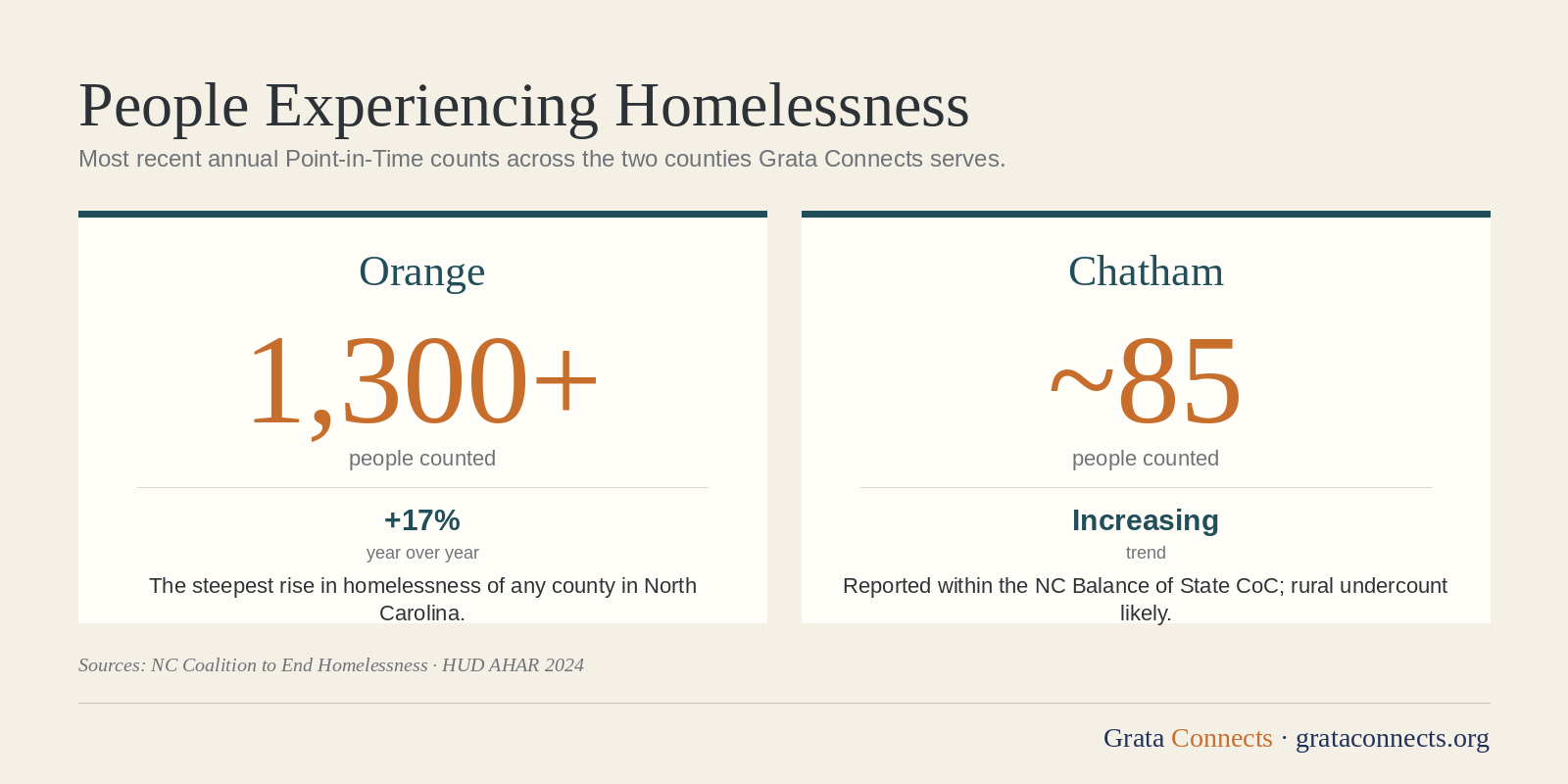
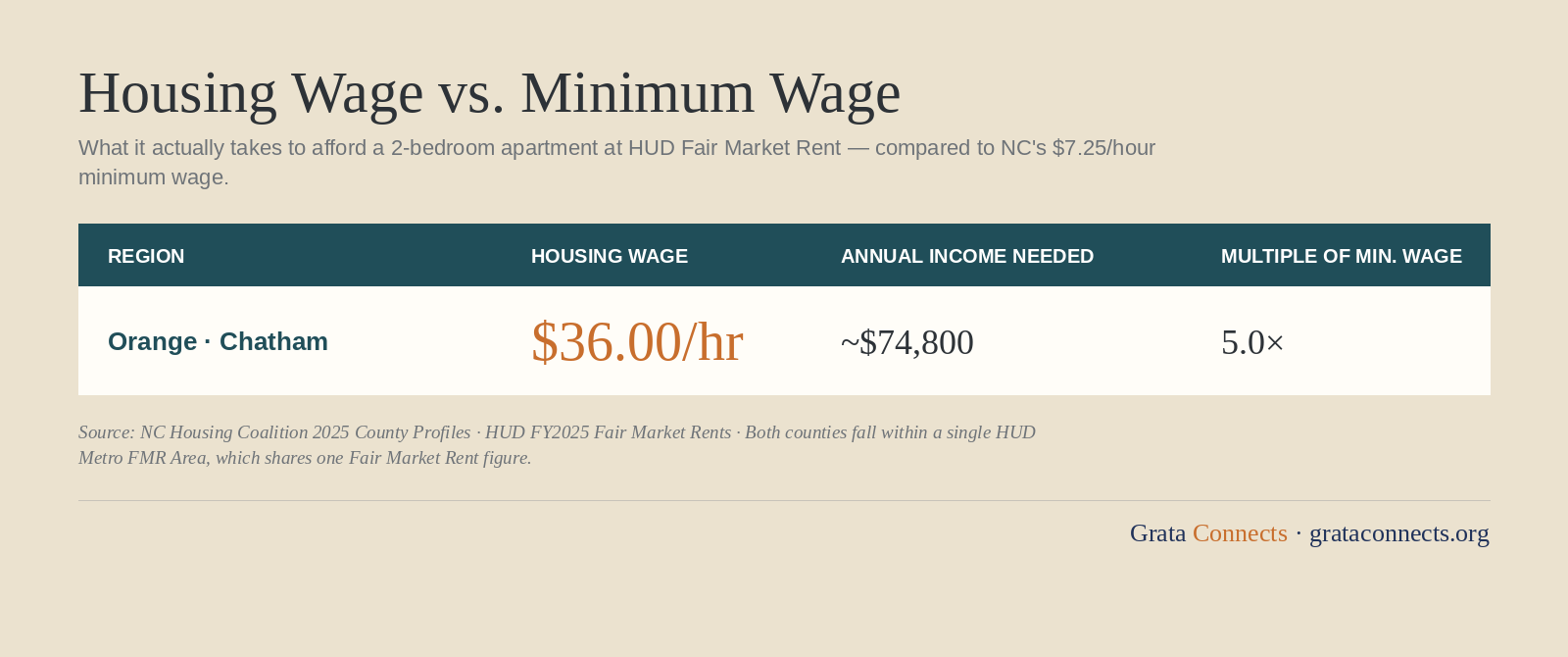
A community priced out of its own backyard.
The people who teach our children, care for our elderly, prepare our food, and keep our community running can no longer afford to live here. Orange and Chatham share a single housing market — and it's the most expensive in North Carolina.
49% of North Carolina renters are cost-burdened, paying more than 30% of income on housing. Statewide, that's 638,000 households one crisis away from instability. In our region, the share is even higher.
194K
Eviction filings in NC in 2024 — nearly 30,000 more than the prior year.
The system is not catching up — it's falling further behind. This is why a parking ticket can become an eviction. Why a missed shift can become a lost apartment. Why a medical bill can become a tent. The margin for error across our region is razor-thin, and it is shrinking.
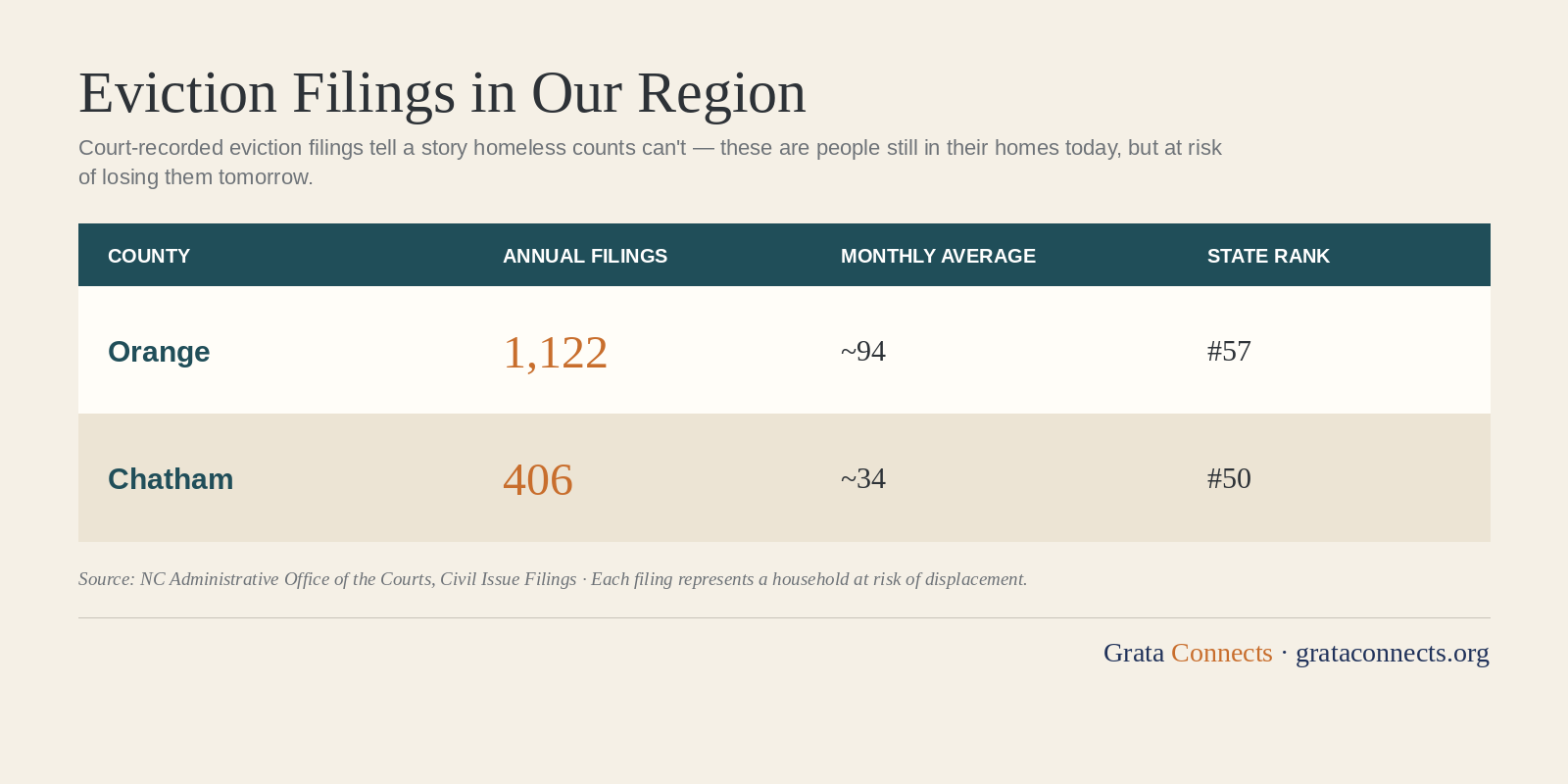
The face of housing instability in our community is probably not who you picture.
It's our neighbors, our coworkers, or the person two seats over at the coffee shop. People one moment away from a crisis they can't navigate alone. Grata Connects exists to close this gap, by walking alongside people from crisis to stability.
The working family
Two jobs between them. A rent increase they can't afford. An emergency car repair. They are not "homeless" yet, but they are watching the clock.
The elderly on a fixed income
Social Security hasn't kept pace with rent. After fifty years in this community, they are being priced out of the only place they've called home.
The young adult aging out
A 21-year-old leaving extended foster care with no safety net, having to navigate the challenges of adulthood with reduced support systems.
This is manageable, with the right approach.
Not by building more programs, but by making the ones we already have easier to navigate for people in crisis. This is what Grata Connects is built to do.
See What We Do